A Sonoma Retreat Where Art Tells the Story
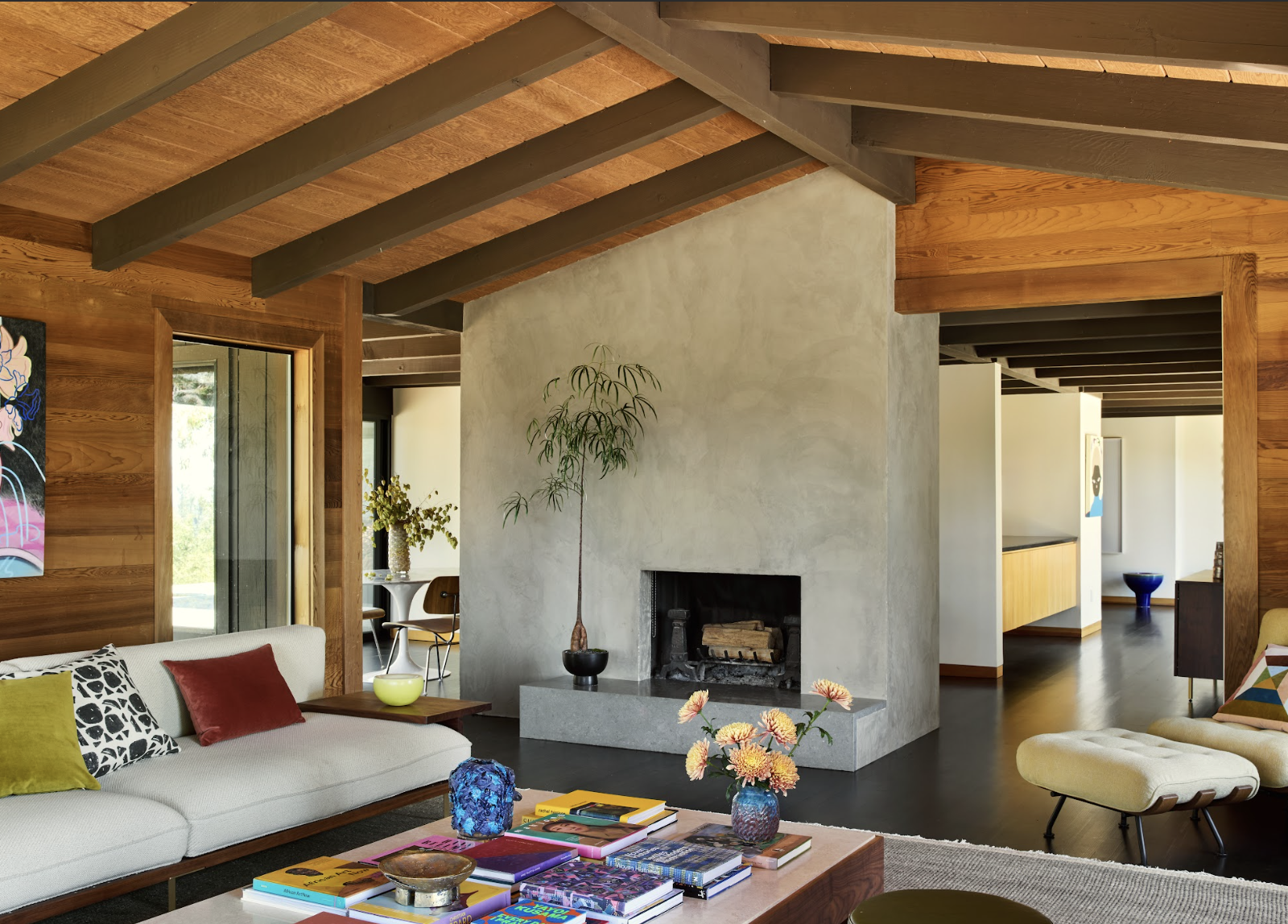
Art does more than decorate a space; it has the power to redefine it. Art generates emotion, conversation, and new perspectives.
What defines the identity of this client’s collection is their unwavering support of women artists. Surprisingly, women artists constitute only 13% of permanent museum collections in the United States. When our clients discovered this disparity, it ignited their passion for championing these artists in their collecting ethos, understanding that sustained patronage is what moves the needle.
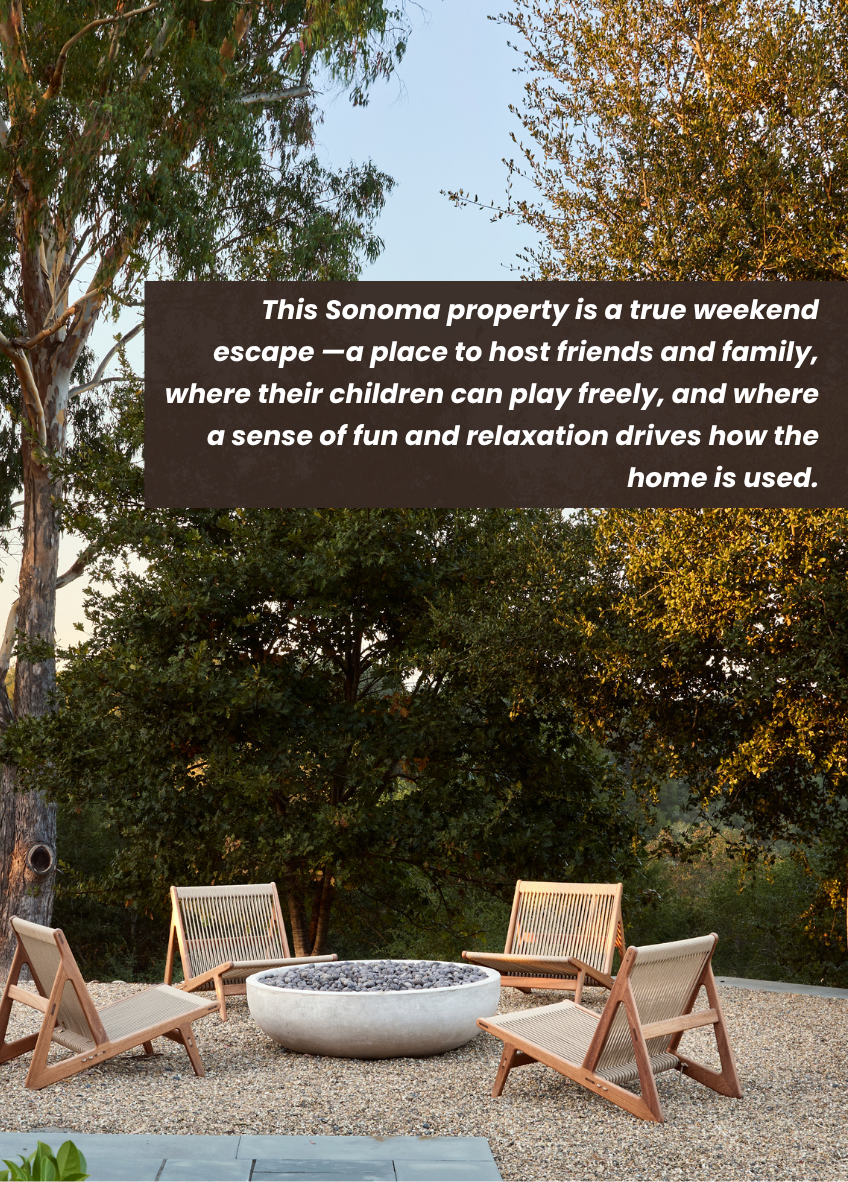
This Sonoma property is a true weekend escape —a place to host friends and family, where their children can play freely, and where a sense of fun and relaxation drives how the home is used. In collaboration with SVK Interior Design and the clients, we sourced works that create a playful, colorful dialogue with the home’s warm wood-paneling and joyful atmosphere
The result is a collection that anchors the home’s mid-century design in a strong, feminist narrative.
Join us for a tour through this artful home.
This is the first artwork you encounter before even stepping foot into the space. Through the large entry hall windows, Asuka Anastacia Ogawa’s portrait stares outward. Installed to be visible from the exterior, the animated presence sets the tone for the home. Born in Tokyo in 1988 and raised between Brazil and Sweden, Ogawa channels her Afro- Brazilian lineage into surreal paintings, drawing on the beauty of her ancestors, including her mother, grandmother, and great-grandmother, to create large-eyed, doll-like, androgynous figures.
As demand for Ogawa’s work continues to be strong, we secured this piece for our client by navigating a competitive waitlist, made possible through our established gallery relationships.
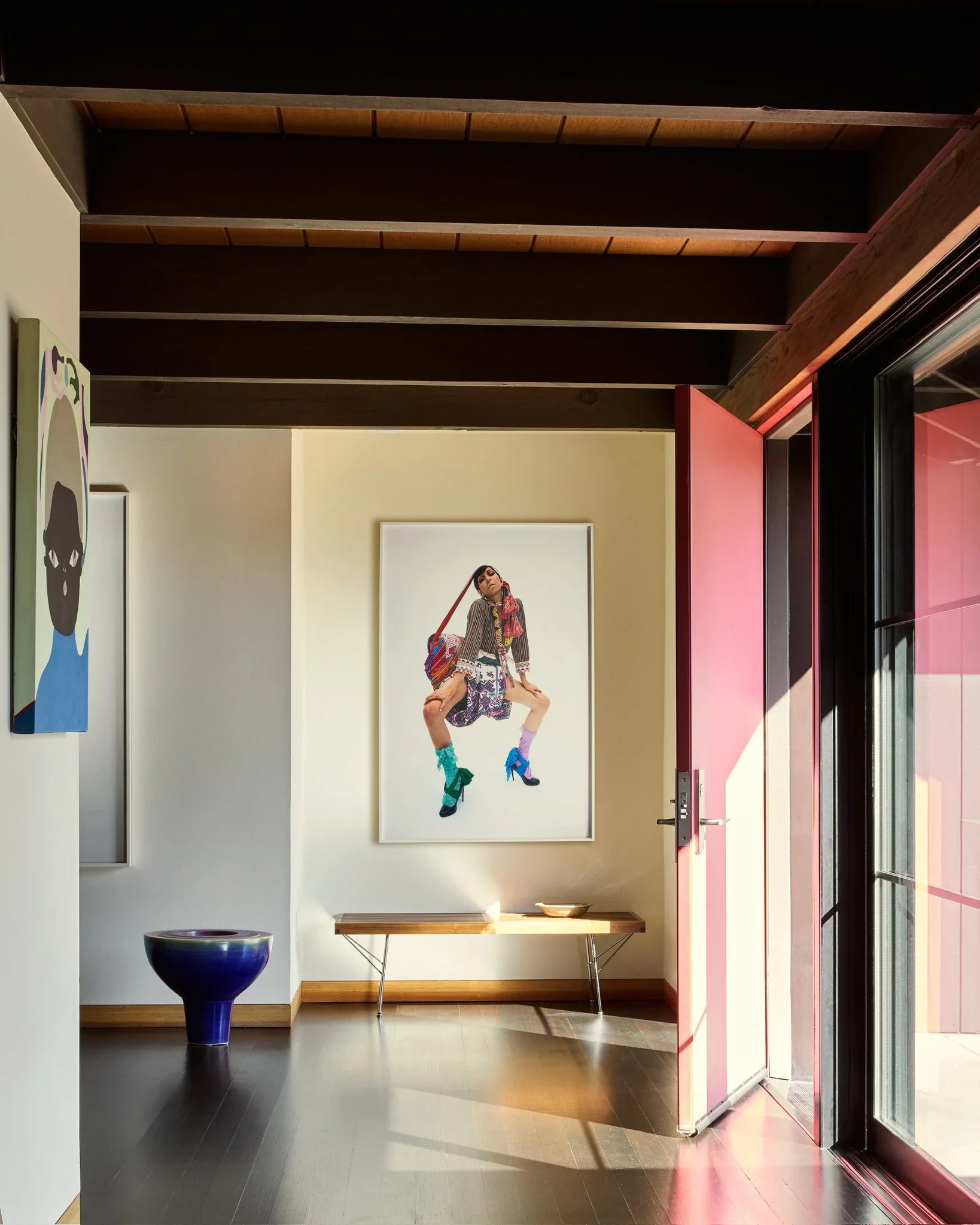
Across the foyer hall is Martine Gutierrez’s colorful self-portrait, Neo-Indeo, Glamour is a Heavy Burden, p36, in the guise of a fashion editorial. Brooklyn-based and born in Berkeley, California, Gutierrez (b.1989) is a trans American artist of Guatemalan descent who works across photography, film, and performance art. In this photograph from her iconic self-produced magazine Indigenous Woman, she is both the artist and the subject, the photographer and the model.
The fashion editorials Gutierrez recreates typically feature heteronormative narratives that she inserts herself into, not to assimilate, but to challenge. In doing so, self-representation becomes both a tool of visibility and a form of resistance.
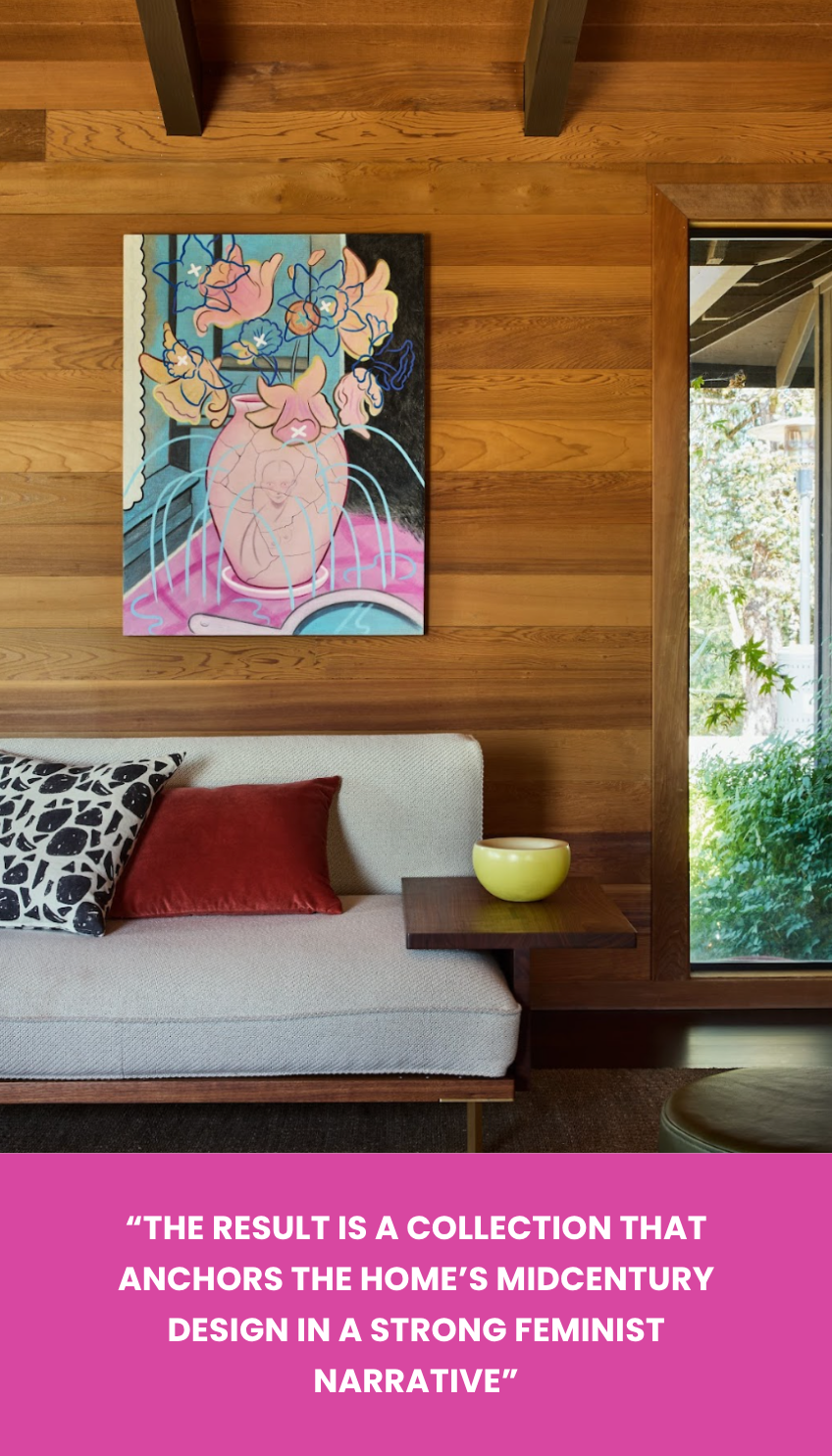
From the foyer you enter the living room, where panoramic views of Sonoma’s wine country are juxtaposed with Koak’s (b. 1981) Self Portrait w/ Flowers. San Francisco-based artist Koak explores her own duality present in this painting. The artist’s face appears on a vase that is on the verge of shattering, boldly meeting our gaze. Koak creates a self-portrait that emphasizes her own resilience in the face of external hardship and uncertainty; she refuses to break.
Self Portrait is intentionally placed across from Hayal Pozanti’s Contactless (2021), an abstract piece that features bold organic forms that interlock like a cryptic alphabet, pressing outward from the canvas. They are positioned opposite each other, creating both contrast and reflection. Their exchange is set against the sweeping vineyard views, where the landscape adds a sense of openness to their tension. Koak looks to herself within an object while Pozanti expresses herself through shape and form, two vastly different approaches to the same exploration of identity and selfhood.
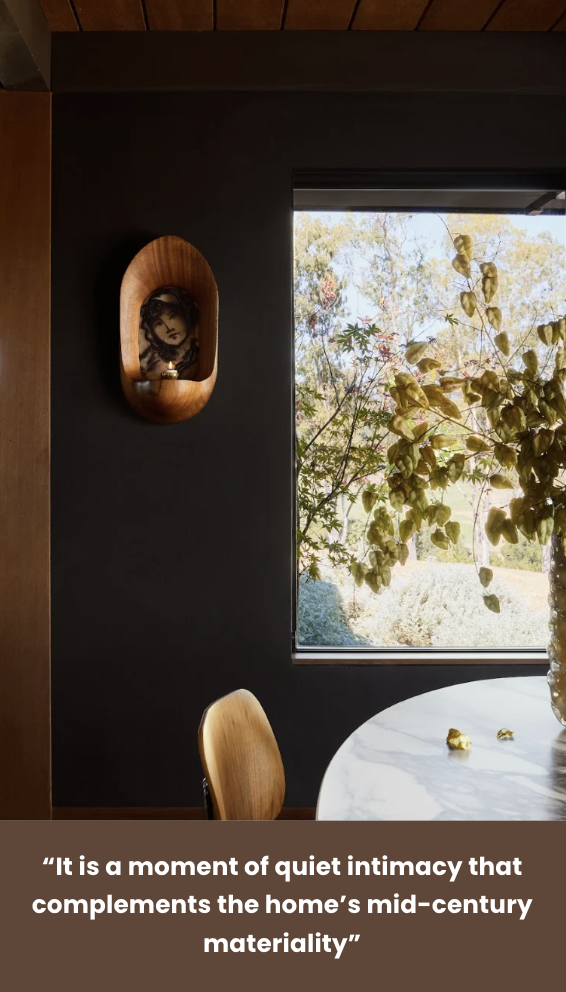
From the living room, we enter into the dining room where Claire Tabouret’s striking stained-
glass portrait of Pamela Coleman Smith, recognized for her illustrations in the famous Rider-Waite tarot card deck, presides over the space. This work is a collaboration between Tabouret (b. 1981) and her husband, furniture maker Nathan Thelen. The portrait is set within a hand-carved mahogany altar, allowing the face to softly emerge from the wood. It is a moment of quiet, intimacy that complements the home’s mid-century materiality.
The candlelight element of the altar piece provides both functionality and atmosphere. It not only
serves as a physical light for the space but sets the tone for shared meals. The altar-like
structure introduces a subtle spiritual dimension—symbolic of ritual and connection, reinforcing
the dining room as a place of communal gathering.
Our role as advisors is defined by maintaining a finger on the pulse and identifying
talent before it reaches a global stage. We sourced Altar (brown) (2023) before Claire
Tabouret was selected from over 100 artists to design the new stained-glass windows for Notre
Dame in Paris, catapulting her to the top of the contemporary art world.
The collection closes in the home’s primary bedroom where Anoushka Mirchandani’s Untitled (2025) hangs.
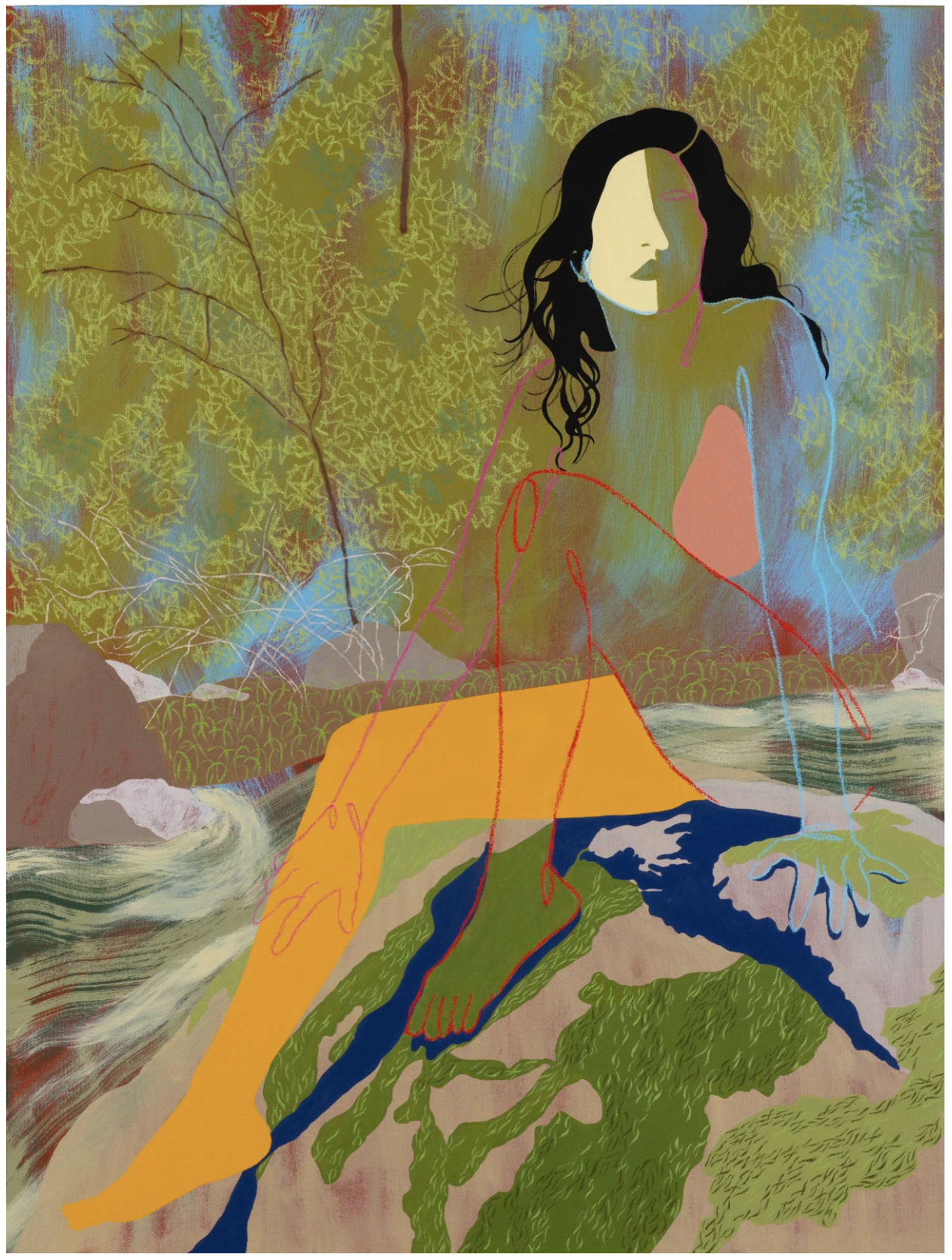
The collection closes in the home’s primary bedroom where Anoushka Mirchandani’s Untitled (2025) hangs. Indian-born, San Francisco-based artist Mirchandani (b. 1988) explores immigrant identity and belonging through presence and absence. In this work, a translucent figure dissolves in and out of a lush, layered forest, neither fully there nor fully gone. The subtle
fragmentation of the figure’s body relates to Mirchandani’s immigrant experience, exploring the
feeling of belonging somewhere and nowhere all at once.
Placed in a more intimate area of the home, the work invites slower looking and contemplation.
We secured this work following an early studio visit, before the artist’s museum debut at The
ICA San Jose.
Throughout the Sonoma home, these works speak to a visual narrative that explores the different ways to be a woman in today’s world.
By partnering with our clients to build a collection that is true to their core values and vision, the home becomes a space that is not only memorable but soulful.