The LSSAA Guide for Designing Your Artful Home

When it comes to building an exceptional home, art shouldn't be the last decision in the design process; it should be the first.
Most people think of art as a secondary layer, something to add once the furniture is in place. We see it differently. Art isn't just decorative; it's a structural element, one that defines a home from the very beginning.
Join us as we share our top tips on how to design, build, and curate an artful home.
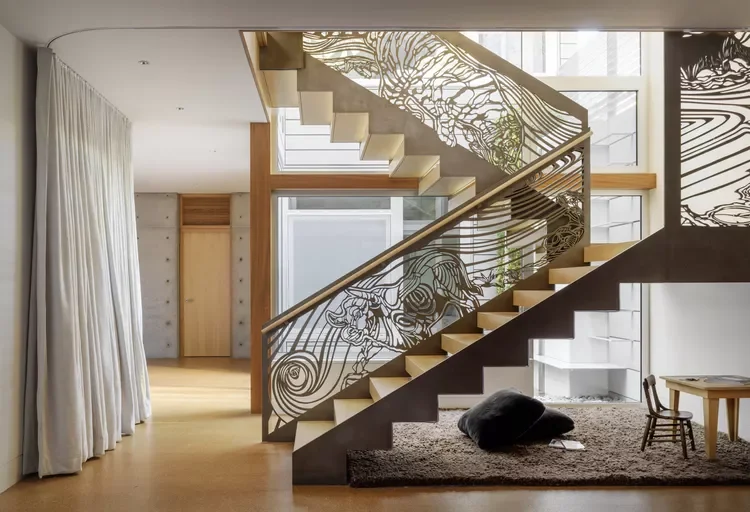
Every project we work on starts the same way: with understanding our clients' vision and how they want art to make them feel. We’re not only focused on bringing great pieces into a client's home but how they'll interact with each other and the space around them.
When we're brought in early enough, we can do extraordinary things, from a custom artist-designed stairwell to large-scale indoor sculpture; the result is a home where art and architecture grow together, each shaping the other from the very beginning.
Art First, Always
For our clients’ renovated historic home in Presidio Heights, Yayoi Kusama’s large, bronze pumpkin was always going to anchor the entryway. We worked alongside interior designer Nicole Hollis and architect Stephen Willrich to build the foyer around it, featuring a Guggenheim-inspired staircase that winds alongside the sculpture, its curves echoing the pumpkin's organic form.
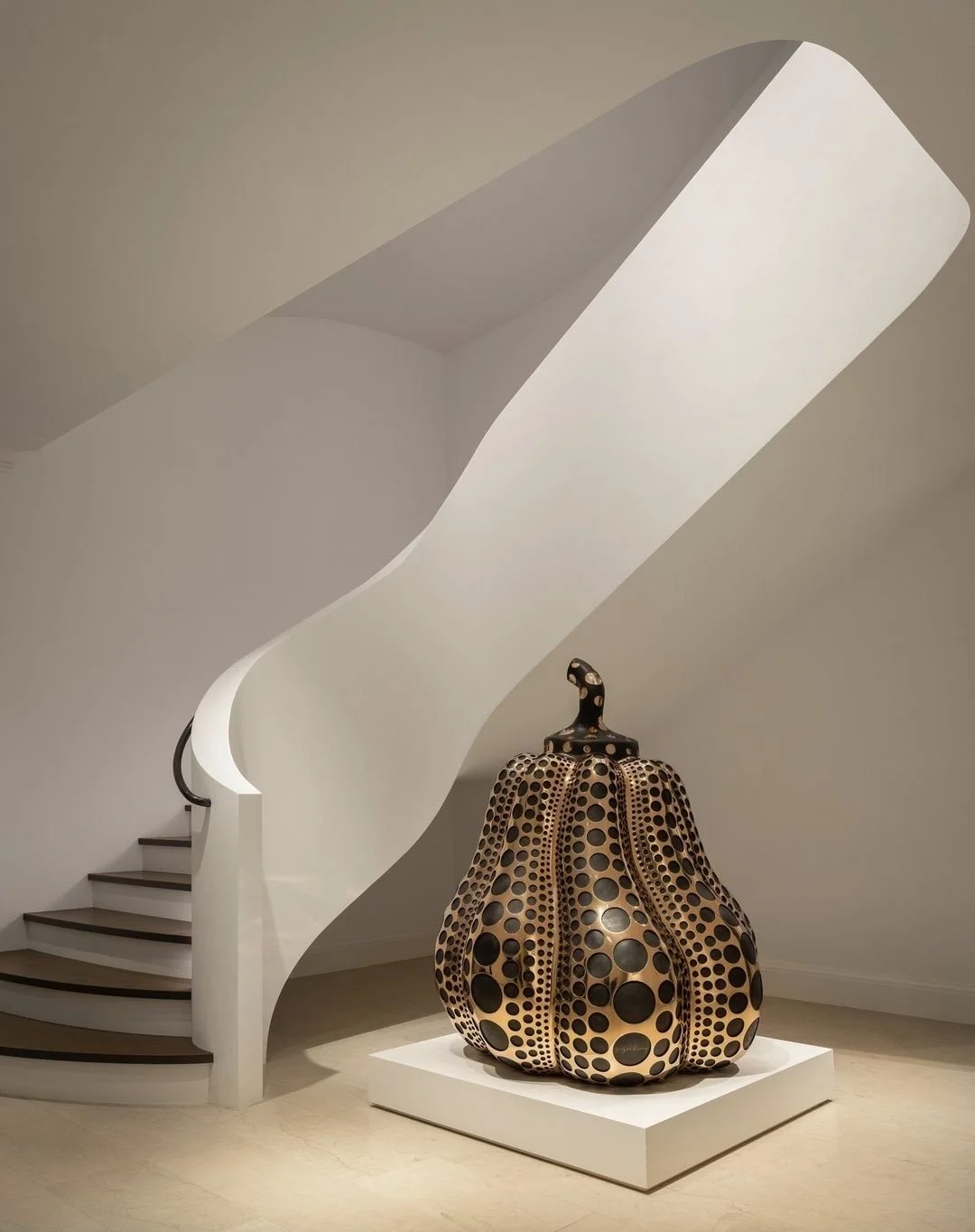
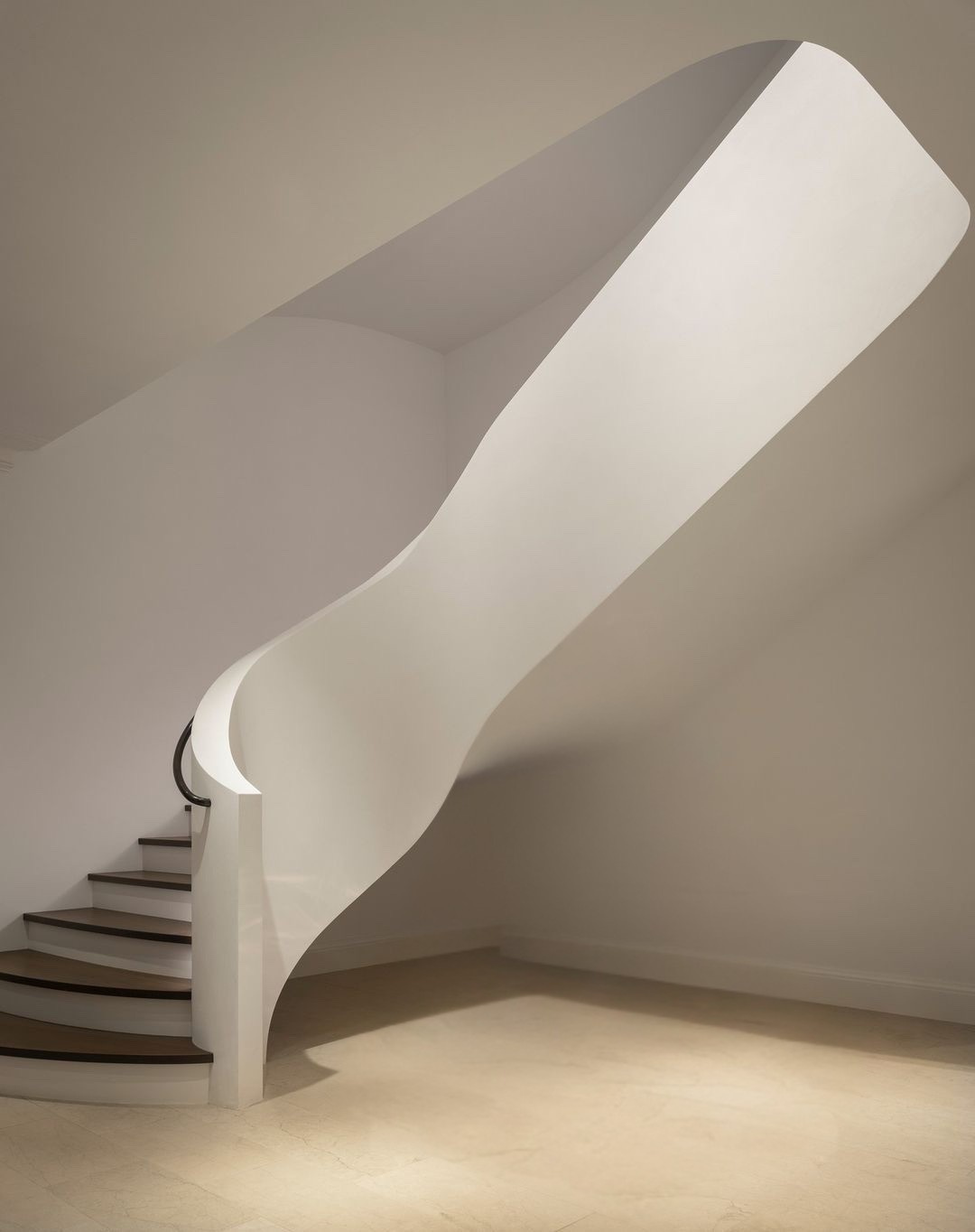
Yayoi Kusama, Pumpkin (L), 2016
Notice how much of an impact art makes?
Walking into this home is unforgettable. Without Kusama’s pumpkin, the space pales in comparison.
Part of our role is offering perspective – art isn't always meant for the walls. Sometimes the most powerful move is thinking about where art can live beyond the expected.
With our Presidio Heights project, the staircase was designed around an artwork. In our clients' Palo Alto home, the staircase is the art.
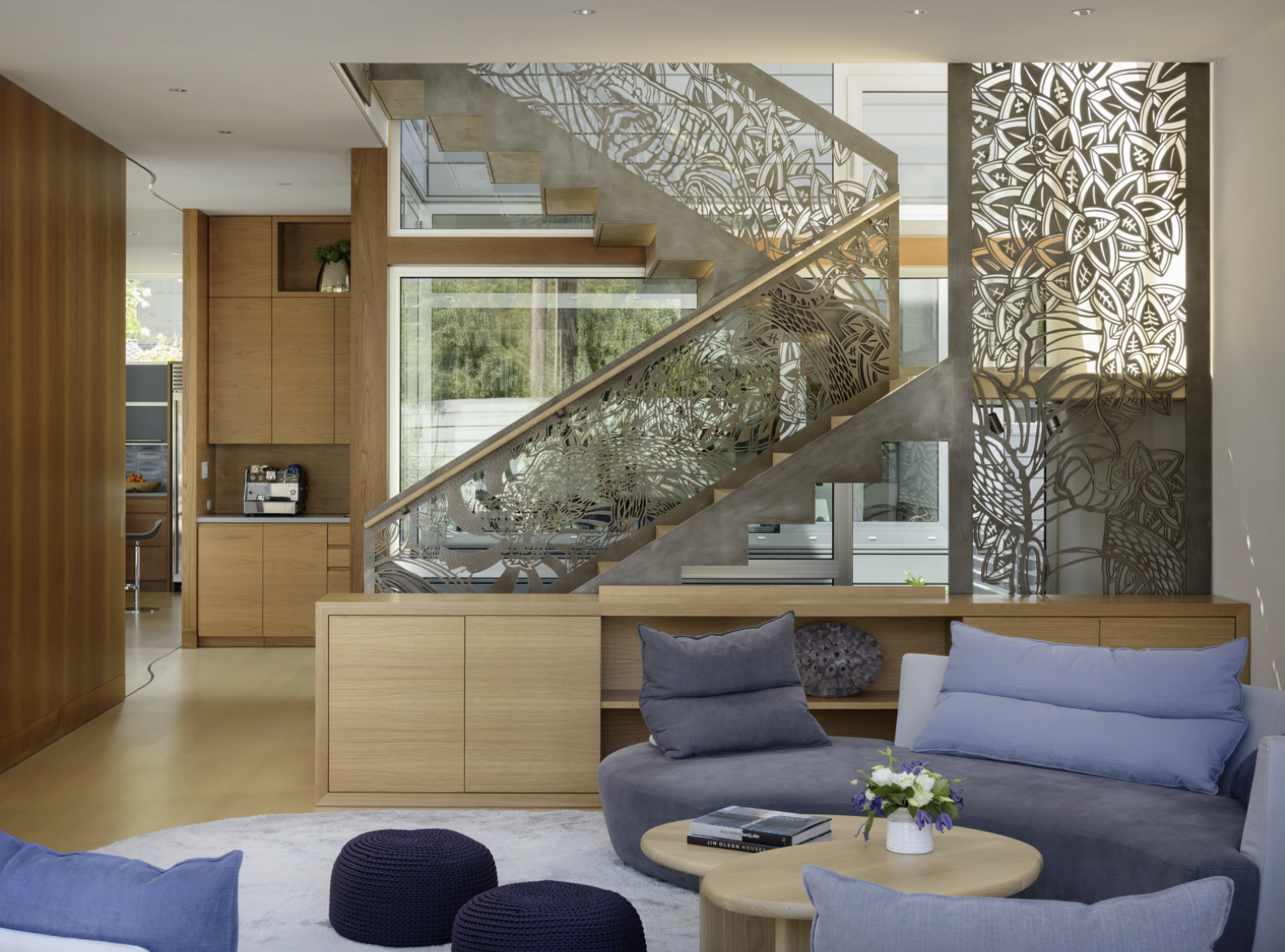
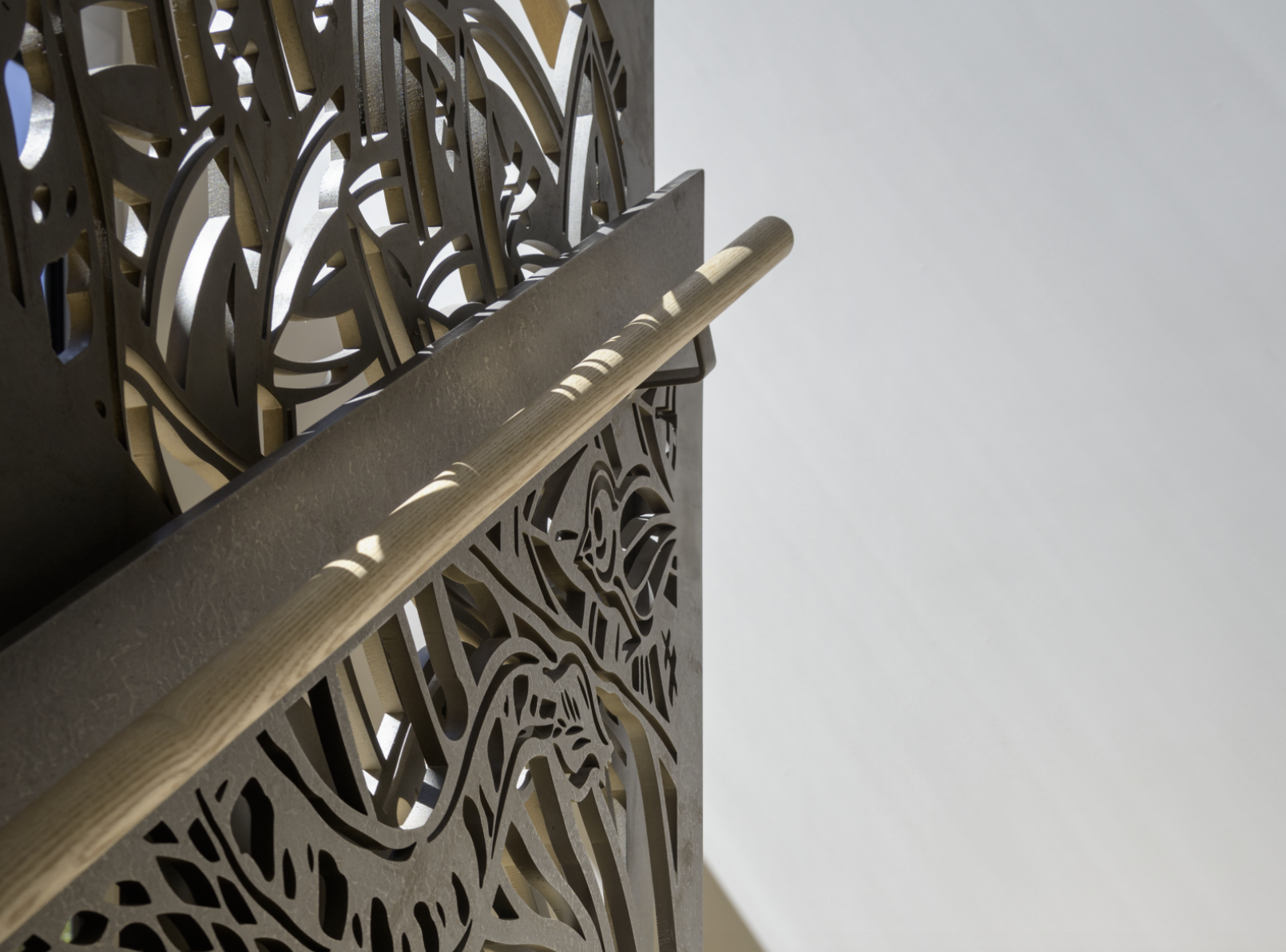
Adam Feibelman,Staircase Commission
Our clients wanted a focal piece that was both functional and aesthetically extraordinary. The result: a custom, load-bearing steel staircase designed by Bay Area artist Adam Feibelman and brought to life by architect Stephen B that spans all three floors of the home. Inspired by the clients' interest in close-up floral photography and their Chinese zodiac symbols, Feibelman translated his signature practice of hand-cutting paper stencils into steel, creating designs rooted in the clients' Chinese heritage, producing a work that is a unique artistic reflection of the family it was created for.
Even the most functional elements of a home still have the capacity to artfully define a space. We look for these opportunities in areas like a home's structural necessities, exploring what can be reimagined as a piece of art in its own right.
Collecting Takes Time
When it comes to finding and selecting artworks that are truly tailored to a client and their home, we always advocate for time. There's a lot of ground to cover – we introduce our clients to the contemporary art world, help them discover what resonates with them, determine a budget, and then find pieces that speak to all of it.


Meghan and Laura guiding clients through an art fair.
Some of the projects we've worked on have taken years. For context, the art featured in our Presidio Heights collection took the client and us over ten years to build.
The depth and specificity of that collection — the reason it feels like it couldn't belong to anyone else — is a direct result of the time invested in building it.
If you're designing a home right now, this is your sign to start thinking about art.
Logistics & Practicalities

Before the walls of a home go up, there are important considerations that need to be made. Bringing an art advisor in early also means thinking ahead to the practical realities of housing significant artwork — from the structural integrity of a home’s wall (what if the piece is 500lbs?) to shipping and installation logistics. How do you get a twelve-foot painting through a front door, or land a custom sculpture in a backyard?
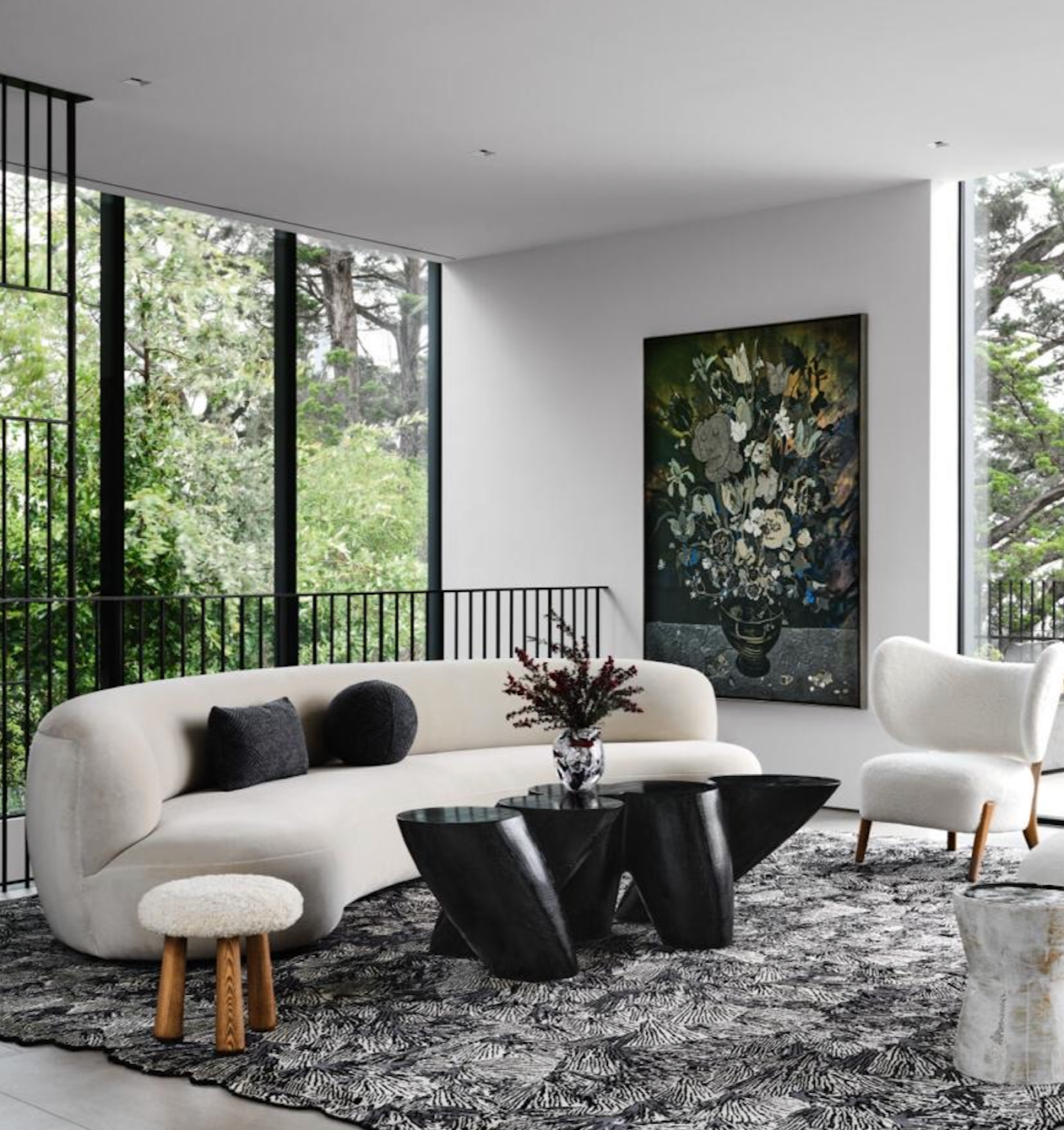
A piece from our Mill Valley collection by Matthew Day Jackson required its wall to be reinforced well before it arrived. At 300 pounds, wall backing, framing, and load-bearing capacity all had to be addressed before those walls were finished, not after. Not every wall can hold every work. If significant work is part of the vision, there are important conversations that need to be had in the beginning.
Interiors by Nicole Hollis; Architecture by Stanley Saitowitz; Artwork by Matthew Day Jackson
The smaller details matter too. A light switch placed in the wrong position, an outlet that interrupts an otherwise perfect expanse of wall. These are details that can determine what art can actually work in a space.
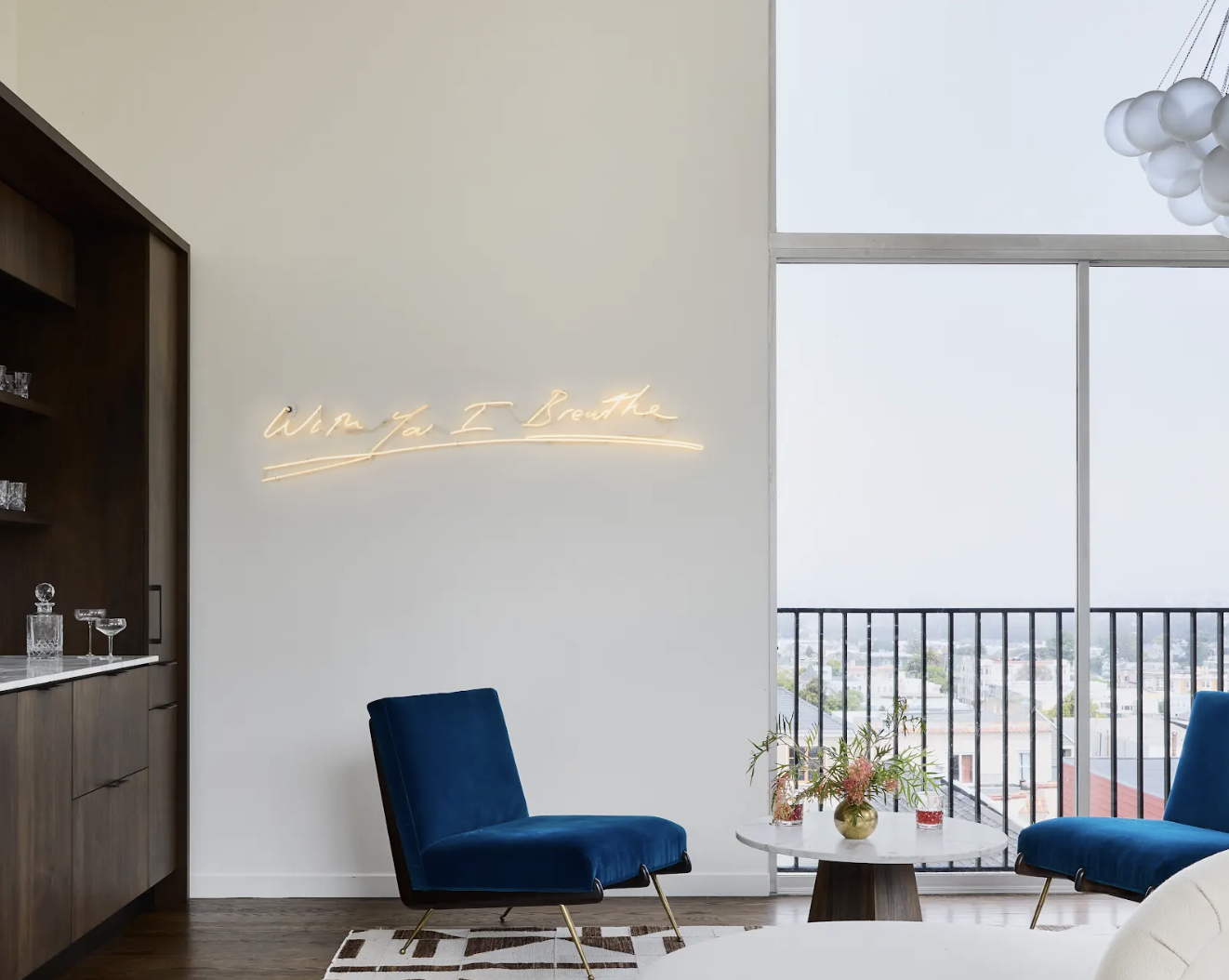
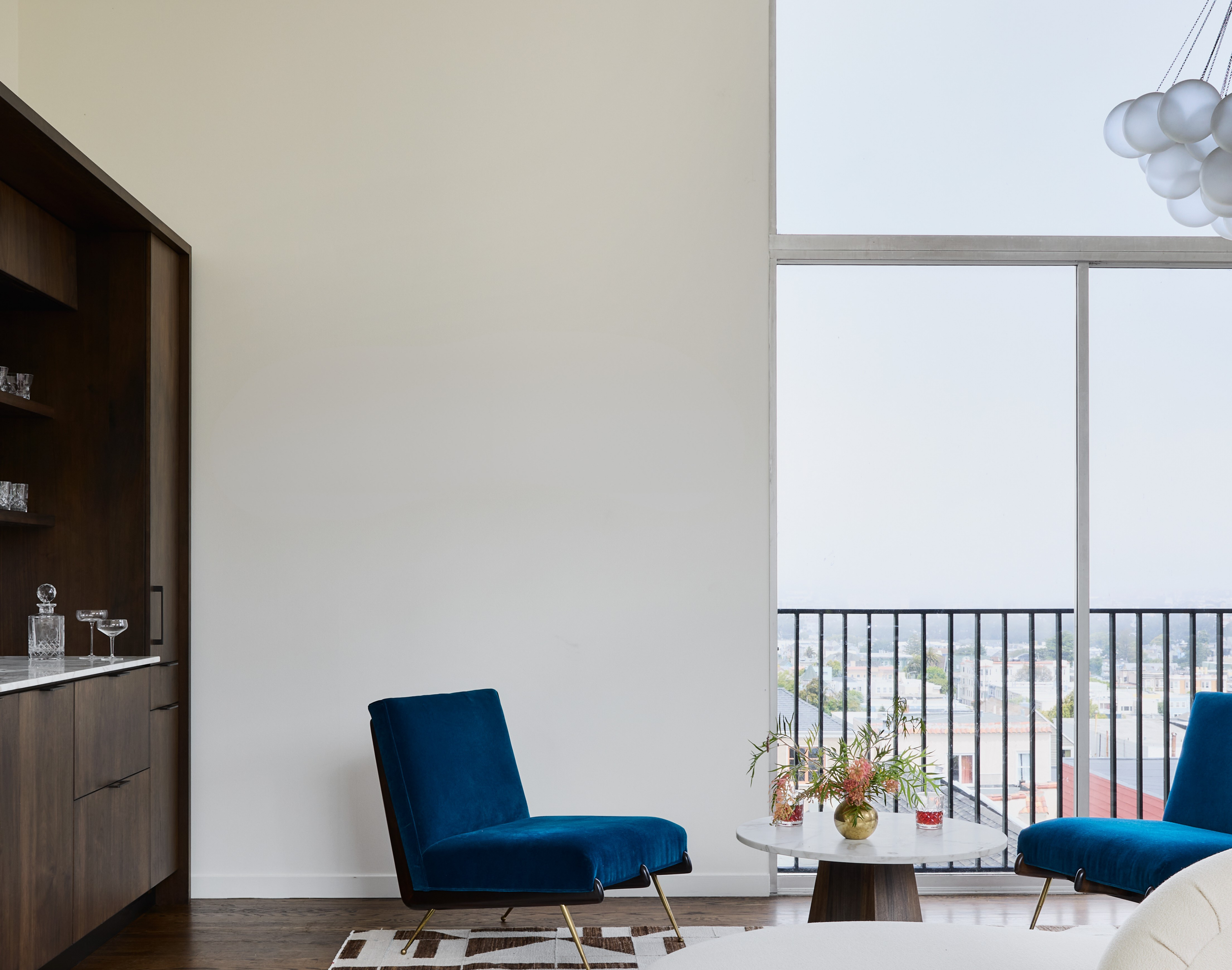
Tracey Emin, With You I Breathe, 2010
Take the Tracey Emin neon piece in our client's Cole Valley home. It needed an entirely blank wall, free of switches, outlets, or trim. Otherwise, it wouldn’t have worked at all.
Setting the Tone
Last but not least, ask yourself: do you want the art to contrast or complement your home?
It's one of the most personal decisions in the process, and both approaches can produce extraordinary results. In our client’s primary residence in Mill Valley, the architecture steps back while the art steps forward.
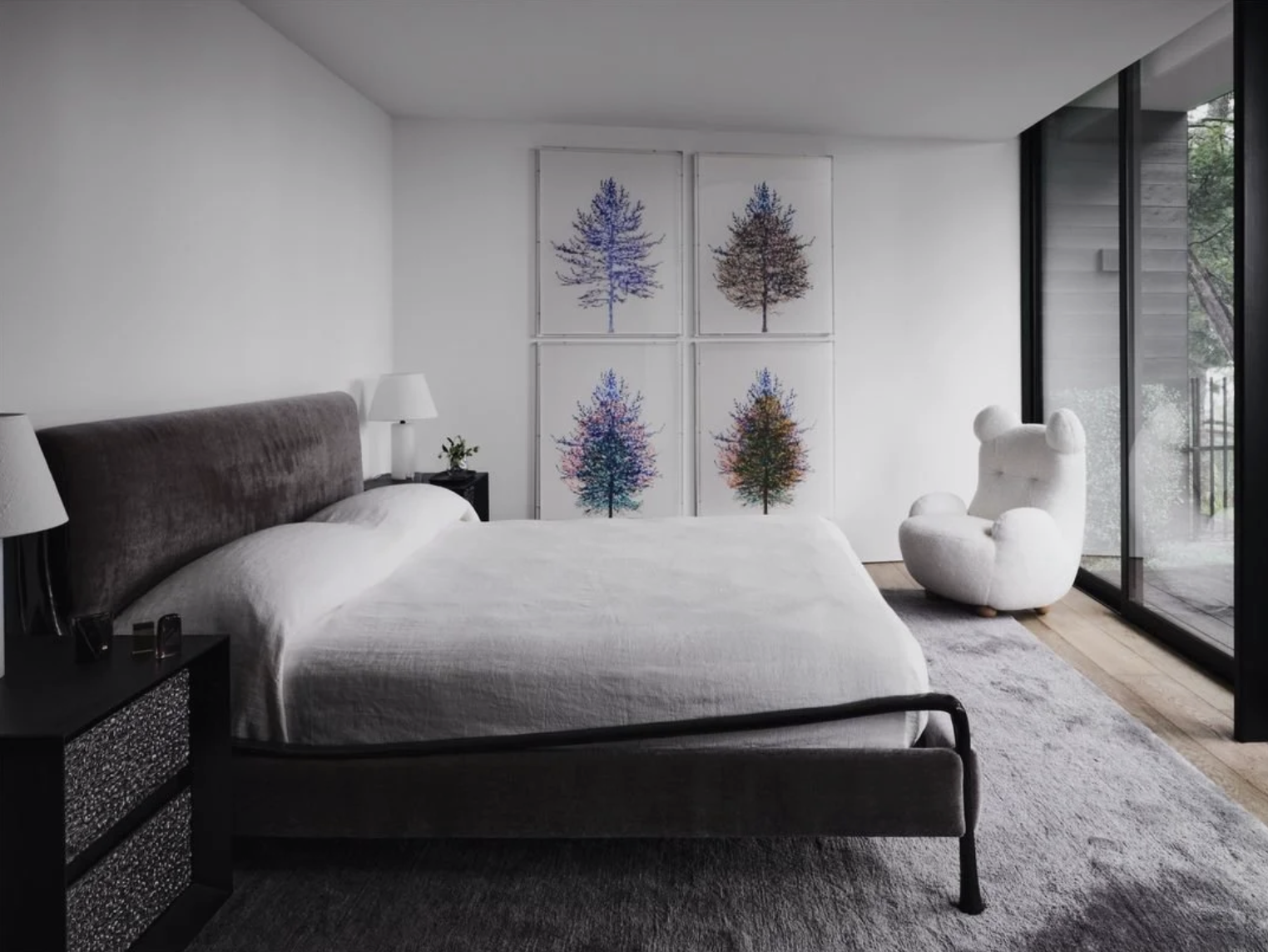
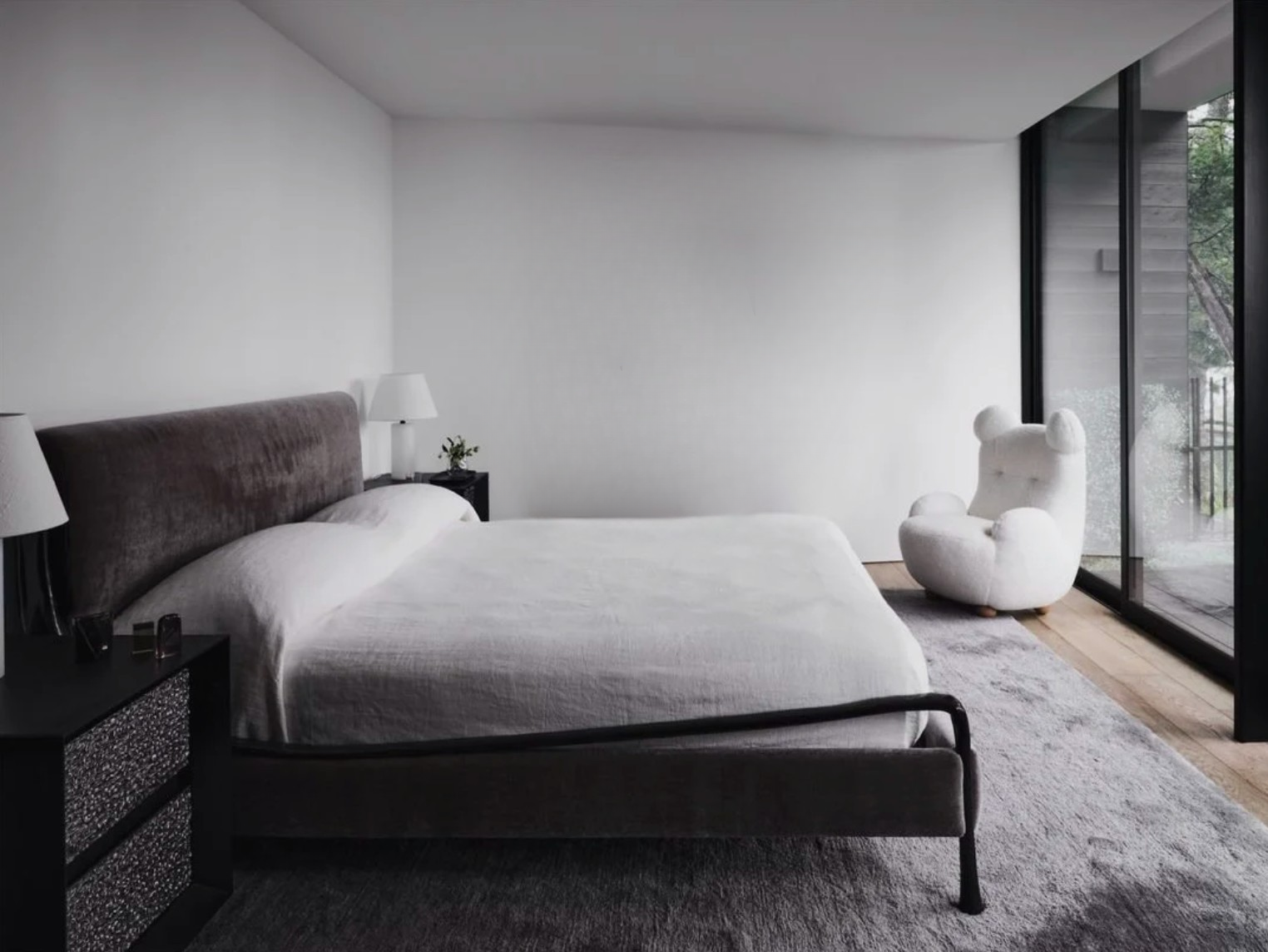
Charles Gaines' Numbers and Trees, Tiergarten Series 3: Tree #1-#6, 2018
Look at the impact Gaines’ series has on the client’s bedroom in their Mill Valley residence or how works by Fred Eversley and George Condo elevate this room.
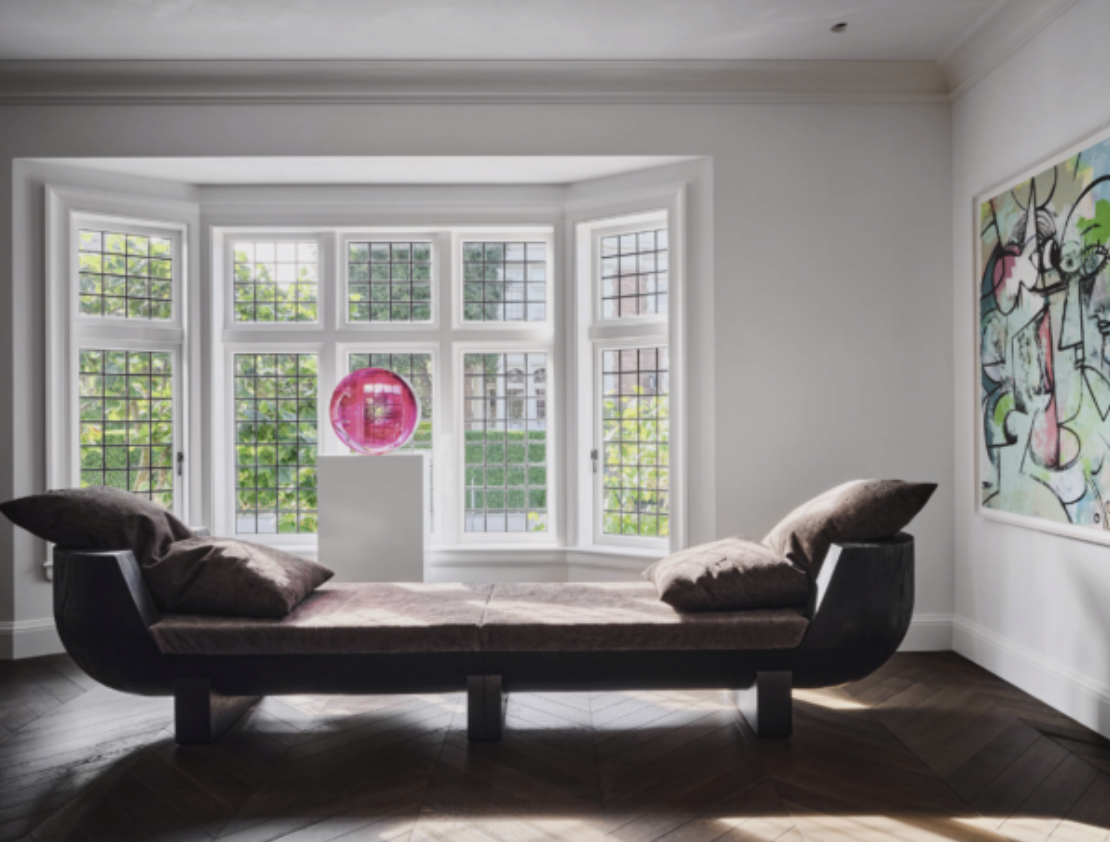
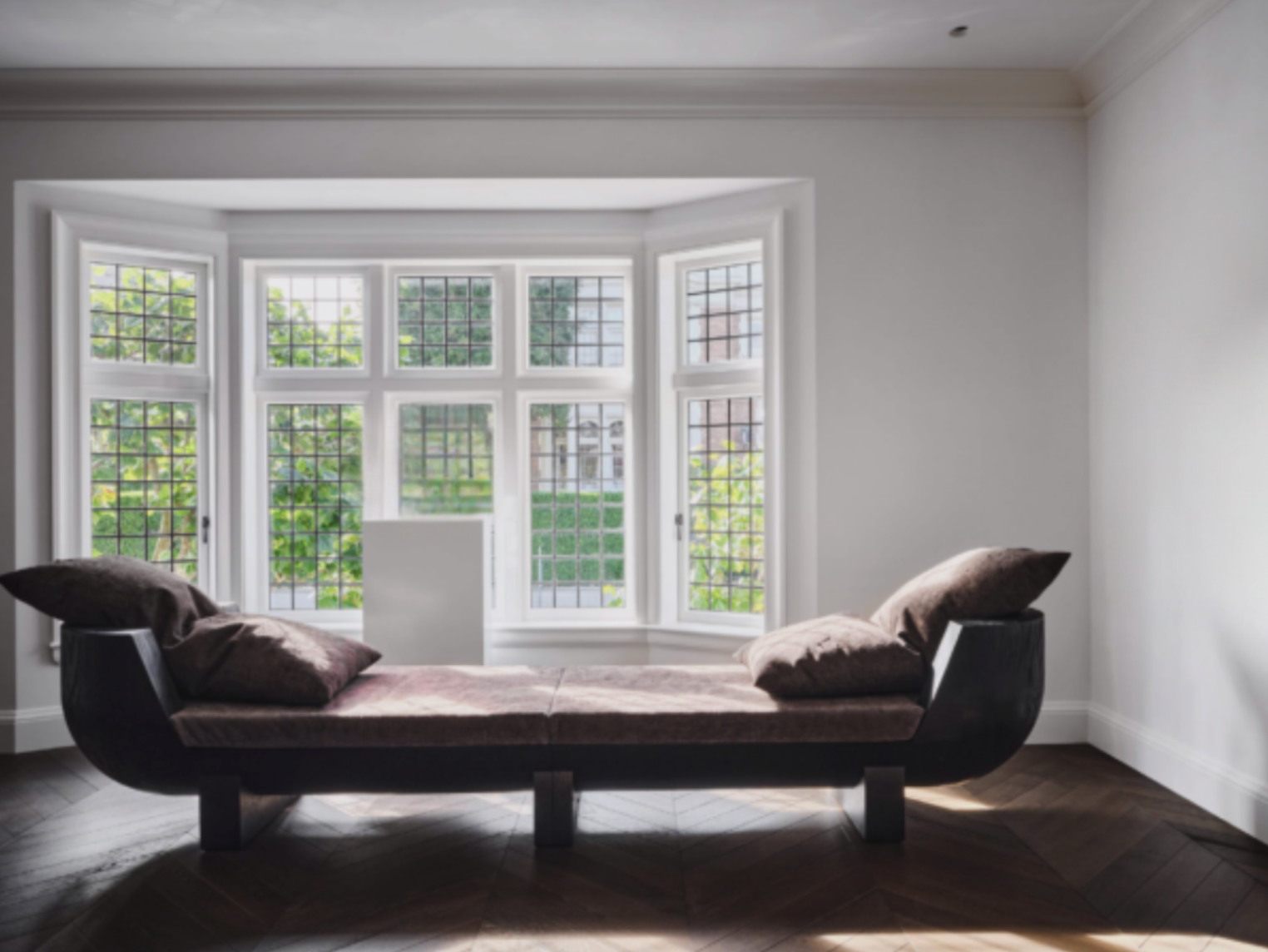
Fred Eversley, Untitled (parabolic lens), 1969 and George Condo, Contemplation (1), 2020
This is what’s possible when art is part of the conversation from the beginning — not the last thing on the list, but one of the first. The homes that stop you, the ones that feel exceptional, are the ones that let art lead from the very beginning, not as an afterthought.
If you're building or renovating in San Francisco or the broader Bay Area and you want your home to be truly exceptional, we'd love to start the conversation.